


To thrive and lead a fulfilling life, I believe we need to nurture the most important relationship in our life – the one we have with our Self!
March is here and spring is knocking on the door… the sun is out more often, it is getting warmer and nature is slowly waking up from the winter sleep. So are we, right?
Let me begin by sharing my news with you…
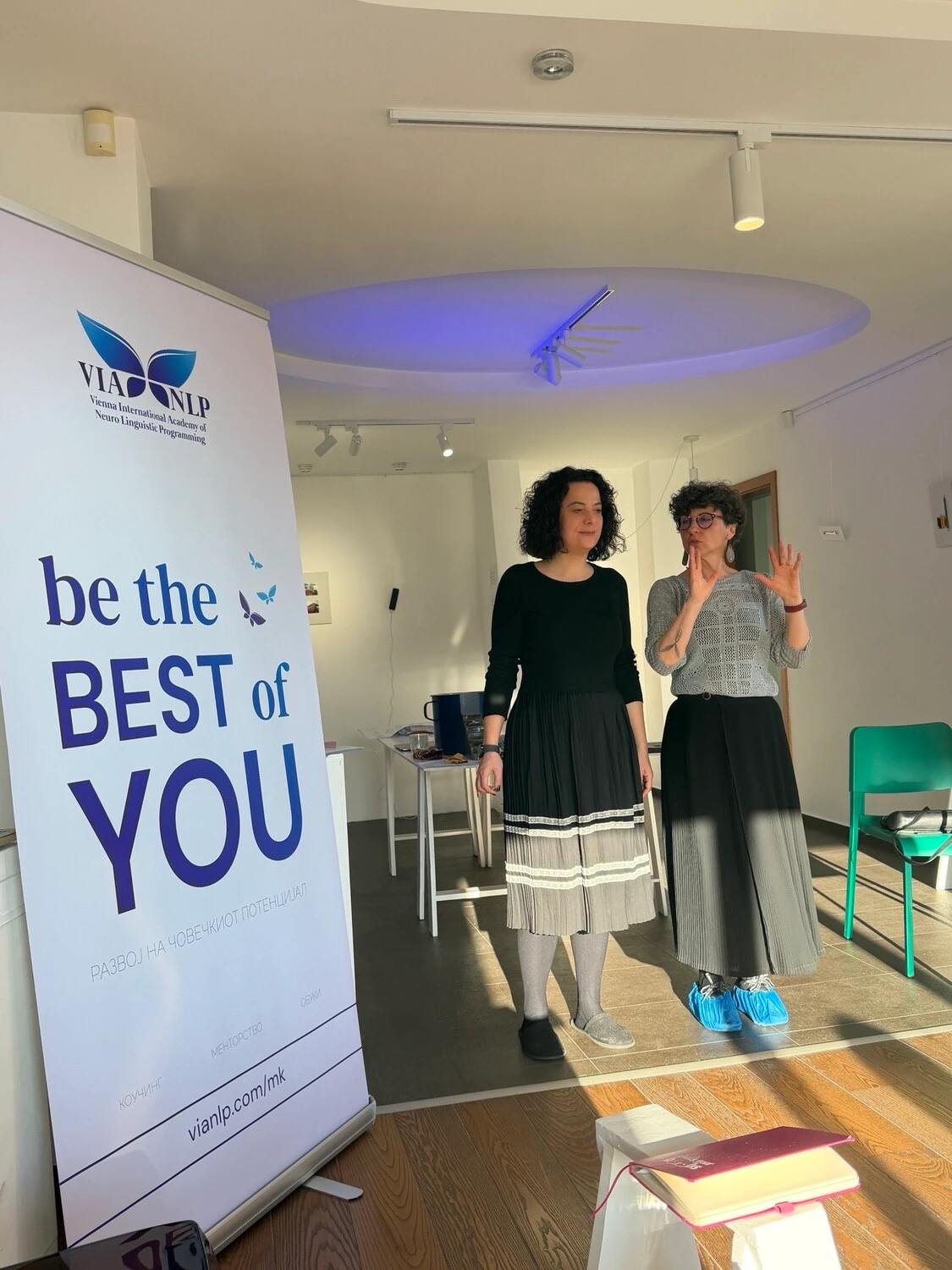
February was intense for me, both personally and professionally. Trainings in Vienna, Skopje and Malmö. Group and individual coaching sessions. Health check-ups. Travel. Busyness takes its toll. Being aware of the intensity, I also intensively plan my rest periods – 8 hours sleep regime, regular massages, spa day, nature and social life. I am curious, do you plan your rest, too?
Another interesting thing I’ve been observing is that these past few months I consciously allowed myself to step into waters that are both deeply familiar and completely new at the same time. Holding this ambivalence is not always easy for me, although moment to moment awareness helps. Every time, it gently (and sometimes not-so-gently) pushes me out of my comfort zone. Old patterns resurface, cycles repeat, triggers fire, and expectations from long ago get projected onto current situations that have nothing to do with the past.
Even after years of reflection, healing and growth… after living what feels like a hundred different lives in between then and now, it is amazing how powerfully the past can reach into the present. At times it feels as if my memories are quietly hunting me, whispering their old stories and clouding the clarity I have right now.
Have you ever felt that too? Years have passed, you’ve changed beyond recognition, yet suddenly an old event echoes so loudly that it colours your emotions, your reactions, even your decisions and choices – today.
What is real in this moment? How much of “now” is actually created by the filters of “then”? And, to dive even deeper, how accurate are those memories that create the filters?
Navigating these experiences requires constantly recalibrating myself to myself, to the other and to the context.
Let’s dive deeper…
Memories and now
Psychology and neuroscience confirm that every memory is not a perfect video recording. It is a reconstruction. Each time we recall something, we rewrite it slightly. How the memory is imprinted in us is influenced by our current emotional state, beliefs and knowledge. Elizabeth Loftus’ groundbreaking research on the malleability of memory shows exactly that.
Additionally, each memory we hold has an emotion attached to it. These emotional tags leave deep traces in our neurobiology. They become neurochemical imprints that can instantly shift our internal state, physiology and behaviour in the present. Depending if the memory is charged with a pleasant or unpleasant emotion, just thinking about it can energise us, or leave us drained, stressed, anxious or even depressed. Even when we are aware that the original context no longer exists, we are still affected.
I witness this constantly in my coaching and training rooms, and here is one situation that happened recently during the NLP Practitioner training.
We were working on timelines (classic NLP tool) and releasing heavy emotions from past memories. Many times such emotions are perceived as traumatic, and have an effect on us in the present life. Two sisters were in the room. The younger shared a childhood memory, as she experienced it in her own perception and as she remembers it. It was clear from her reaction that this memory was traumatic for her, and lead to unnecessary fears and limitations currently, as an adult.
The older sister sat at the back of the room. As she listened to her sister speaking, there was something interesting I observed in her physiology. Eyes wide open, mouth half-open, jaw hanging and a in total disbelief. When she finally spoke, almost with a laugh, she said: “That is NOT what I remember!”
It turned out she had a completely different memory of the same event. They were both there, yet somehow the memory was filtered differently. For one a trauma, for the other not.
Same event. Same family. Same moment in time.
Different emotional imprint → Different memory → Different effect on their adult lives.
One carried unnecessary fear and limitation.
The other carried… almost nothing.
The past is like a rear-view mirror – useful for orientation and information, dangerous if we stare at it while driving. It is meant to inform us, not imprison us or rule our current life.
We discussed how crucial this is with the leaders at my last training. A leader who unconsciously reacts from old wounds or outdated stories will make decisions from fear, scarcity or the need to prove something. A leader who has gently cleaned the emotional charge from the past can respond from clarity, creativity and true presence.
So how do we loosen the grip of old memories and step more fully into NOW?
Here are a few practices that help me (and my clients):
- The 3-Question Check: when something feels disproportionately intense: → Is this feeling 100 % about the present situation? → What older situation does this remind my system of? → What does the part of me that got activated back then actually need right now (safety, acknowledgment, love)?
- Daily “Memory Audit”: At the end of the day ask: “Which moments today were truly new, and which were coloured by old stories?” Just noticing already creates distance.
- Body-First Reset: When you notice the old state creeping in – change physiology immediately: stand up, shake, breathe deeply, walk barefoot, change environment. The body rewires the brain faster than thinking.
- Reframe the Role of the Past: Instead of “I must heal everything,” try: “The past is my wisest teacher – once I extract the lesson, I can travel lighter.”
In the age of deepfakes, viral misinformation, and polarized narratives, Loftus’s warning is more relevant than ever: Memory is constructive, not reproductive. We don’t just recall events, but we rebuild them, and that rebuilding process is easily hijacked.
Richard Bandler once said:
“The best thing about the past is that it’s over.”
And John Grinder added that the meaning of any event is the meaning we give it.
We are the authors.
If you lead teams, projects, or simply your own life, I invite you to pause and ask yourself gently:
Which old story am I still letting write today’s chapter?
What becomes possible when I close that book with gratitude and open a blank page?
The present is the only place where real leadership – and real life – actually happens.
To finish,
My message for the month of March is:
Soak in every experience, take the learning and let go of the emotion.

Much love, Viktoria ❤️